
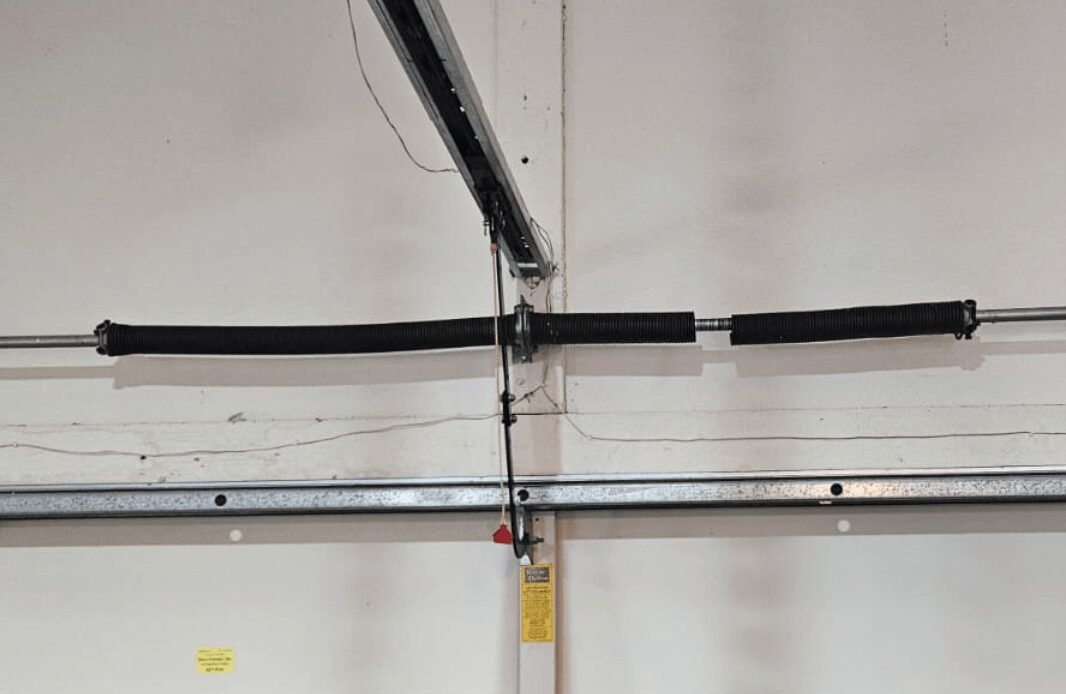
Broken Spring 101: Signs Your Garage Door Is Failing
You walk into your garage, press the button, and hear a sound like a gunshot echoing off the walls. Your garage door refuses to move, or perhaps it only lifts a few inches before grinding to a halt. This sudden failure usually points to a broken spring, one of the most common and disruptive mechanical issues a homeowner faces.
At Garage Door Repair Miami, we know that because the springs hold the immense tension required to lift a heavy steel door, a snap instantly turns your automated entrance into a manual deadweight. Understanding these warning signs allows you to act before you find yourself trapped inside or outside your own home.
Why Garage Door Springs Fail
Most homeowners assume the garage door opener does all the heavy lifting, but the springs actually perform the grunt work. They act as a counterbalance, neutralizing the door’s weight so the motor can move it with ease. Over time, metal fatigue, rust, and extreme temperature shifts weaken the steel. Every cycle—opening and closing the door—stresses the coils until they eventually reach their breaking point.
If you use your garage as your primary front door, you put significantly more strain on the system than the average user. Standard torsion springs typically last for about 10,000 cycles. While that sounds like a lot, a busy family can easily hit that limit within five to seven years. When the metal finally gives way, the release of tension is violent and immediate, often leaving the door completely immobile and creating a safety hazard for anyone nearby.
Visual Red Flags and Strange Noises
The most definitive way to identify a failure involves a quick visual inspection. Look at the metal bar above the door inside your garage. If you see a torsion system, look for a visible gap in the coils. A healthy spring looks like a continuous tight cylinder; a failed one will have a clear break, usually two to three inches wide, where the steel snapped.
Beyond the visual, listen to your door’s performance. If the motor sounds like it is straining or screaming to lift the door, the springs are likely failing to provide the necessary support. You might also notice the door rising unevenly. If one side looks higher than the other during operation, one spring has likely lost its tension or snapped entirely, forcing the door to “walk” up the tracks at an angle. This misalignment can quickly damage the tracks and rollers if you don’t address it immediately.
The Dangers of Mechanical Imbalance
A garage door with a failing spring is a ticking time bomb for your opener. When the spring stops assisting the lift, the opener’s motor must pull the full weight of the door—often 150 to 300 pounds—on its own. This leads to stripped gears and burned-out circuit boards within days. Furthermore, the safety cables may snap or come off the drums if the tension disappears suddenly.
Never attempt to “help” a door with a snapped spring by pulling the emergency release cord while the door is open. Without the spring’s tension, the door will crash down with enough force to crush anything underneath it. Professional technicians possess the high-torque tools and specialized training required to wind these springs safely, protecting both your property and your physical well-being.
Identifying a broken spring early saves you from costly secondary repairs to your opener and tracks. If you see a gap in your coils or hear your door struggling to rise, call the professionals at Garage Door Repair Miami to restore your home’s safety and convenience. We provide fast, reliable service to get your daily routine back on track.